
Good evening.
Tonight, we take you back to the winter of 1985… to a quiet council house in Rhydyfelin… and to a family who say their Christmas was overshadowed by something they could neither see nor explain.
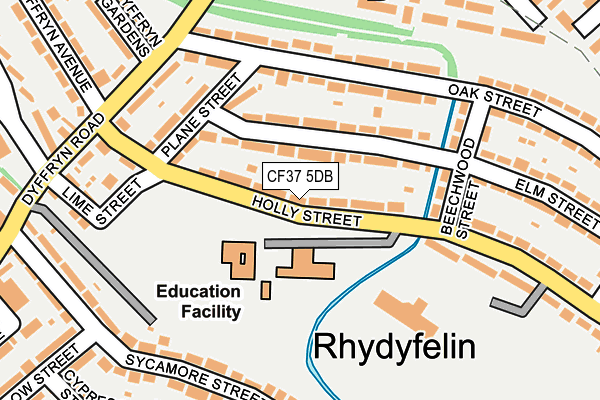
Number 53 Oak Street sits in a neat row of semi-detached homes, the sort of place where neighbours nod politely and children ride their bikes along the pavement. But inside that three-bedroom house, just days after Christmas Day, the Griffiths family began to experience something that would leave them afraid to climb their own stairs alone.
Derek and Brenda Griffiths had lived there since April 1982. A working family. Derek employed at the Ford factory in Bridgend. Two children – four-year-old Amanda and her older brother Craig. Derek’s mother, Eleanor, living with them as well. Ordinary lives. Ordinary routines.
Until Christmas Day.
It began subtly. A window upstairs… opened. Derek was certain he had shut it. He closed it again, firmly. Later, it was open once more.
They checked for drafts. Faulty latches. Misaligned frames. Nothing.
Then money began to move.
One-pound coins left on sideboards disappeared… only to turn up in impossible places. Under the stair carpet. Not simply slipped beneath an edge – but buried so far underneath that Derek had to lift the entire carpet to retrieve them.
Two £20 notes vanished altogether.
“At first,” Derek would later say, “I thought we’d been burgled.”
The police were called. The attic was checked. Windows inspected. No sign of forced entry. No explanation.
But the incidents didn’t stop.
Lights flicked on when no one had touched the switches. Clothes were strewn across beds. Keys moved from where they had been carefully placed.
The epicentre, the family insisted, seemed to be the smallest bedroom in the house – the room belonging to little Amanda.
Four years old. A room of toys. A bed beneath a window. And on the wall… a three-foot-high Pierrot doll with a china face.
Amanda no longer sleeps there.
The family now go upstairs only in pairs.
“We’ve all been downstairs together,” Derek explained at the time, “when things have happened upstairs.”
They questioned the children gently. Had they moved anything? Hidden coins? Played tricks?
No. The children were as frightened as anyone.
And then there was the dressing gown.
Brenda’s dressing gown, ordinarily hanging where she left it, began appearing in different rooms. Laid across chairs. Folded oddly. Once, with its collar ripped.
No one admitted moving it.
Eleanor Griffiths, Derek’s mother, had her own unsettling experience. In her room, the wardrobe key – kept high in a recess, not easily reached – somehow found its way into the wardrobe door. The door stood wide open. A bag of clothes removed from a cupboard and scattered across the bed.
The family began to pray nightly.
They are believers, they said. But belief is one thing. Living with the unknown is another.
Word spread quietly at first. Then more widely.
Some neighbours laughed. Suggested mischievous children. Overactive imaginations. Post-Christmas stress.
But fear has a way of settling in the bones.
“It’s like having a fear,” Derek later explained, “but you don’t know what you are fearing.”
Windows were wired shut. Precautions taken. Rational explanations exhausted.
Finally, in desperation, the family called in a clergyman… and a local spiritualist.
When the spiritualist stepped into Amanda’s small bedroom, she paused.
She sensed, she said, “a little boy… lost.”
What does that mean to a frightened family? Comfort? Or deeper unease?
As days passed, the atmosphere in the house changed. Christmas cards still lined the mantelpiece. The tree lights still blinked in the corner of the living room. But the warmth of the season had drained away.
Even the Pierrot doll seemed altered.
They had owned it for two years without incident. Yet now, under certain light, Derek thought it looked as though tears ran down its cheeks. Its painted eyes appeared… different.
Perhaps fear reshapes what we see.
Or perhaps not.
Through it all, Derek – a burly factory worker, practical, grounded – found himself close to tears.
“We just don’t know what is going on here,” he admitted.
Then, as suddenly as it began… it stopped.
After the story became known locally, curious visitors approached the family, eager for details. What was it like? What had they seen?
And then came a turning point.
The Christmas decorations were taken down. The tree dismantled. The festive remnants boxed away.
And the dressing gown – the wandering, ripped dressing gown – was burned.
After that, the Griffiths family reported, there were no more opened windows. No more vanishing coins. No more lights flicking on in empty rooms.
Silence returned to 53 Oak Street.
Was it coincidence? A series of misunderstandings amplified by anxiety? A case of mislaid objects and winter drafts, transformed by fear into something larger?
Or did something unseen pass briefly through that Rhydyfelin home… only to depart as quietly as it came?
There were no more calls to the police. No further visits from spiritualists. The children slowly returned upstairs. Amanda, eventually, to her own bed.
Life resumed its ordinary rhythm.
Yet for the Griffiths family, Christmas 1985 would always be remembered not for gifts or gatherings… but for footsteps unheard, coins misplaced, and a house that, for a short time, no longer felt entirely their own.
And perhaps that is the most unsettling part of all.
Not doors slamming.
Not lights flickering.
Not even a doll’s painted tears.
But the feeling… of being afraid in the very place you are meant to feel safest.
This has been the story of the Oak Street mystery.
And whether you believe in restless spirits… or restless imaginations… one thing is certain:
For one Rhydyfelin family, it was no laughing matter.
Good night.