
Good evening.
Tonight, we travel back to the autumn of 1893… to a narrow street in the Rhondda Fach Valley… where a small terraced house became the centre of fear, fascination, and whispered prayers.
The village was Ynyshir. The address: Number 12, Whitting Street.
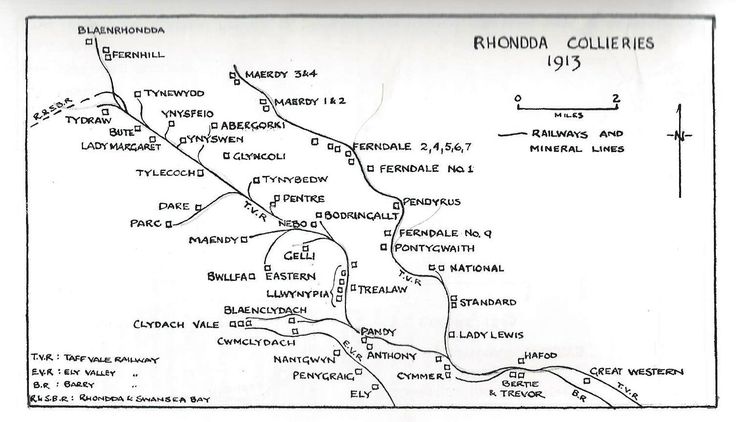
In those days, the Rhondda valleys were alive with coal. Rows of workers’ cottages stretched along the hillsides. Smoke drifted from chimneys. Boots struck the pavements before dawn. Life was hard, close-knit, and rarely private.
And in October of that year, something unsettled the entire community.
It began with noises.
Not the ordinary creaks of timber or the rattle of wind against slate. But footsteps. Measured. Heavy. Moving through empty rooms at night.
There were sounds too — as though someone were chopping wood. Knocking. Tapping. Regular as clockwork. Every five minutes, residents said. Always after dark.
Two years earlier, a man had died in that very house — a man named Phillips, taken by smallpox. In a time before modern medicine, such deaths left deep marks on a community. Stories clung to places like damp to stone.
Now, neighbours whispered that Phillips had returned.
The house was occupied by Mr. and Mrs. Walter Gould. Like many cottages in the valley, it was meant for two families sharing the rent. But for months no one would agree to move in. Word had spread.
Mrs. Gould, described as a neat young Englishwoman, spoke solemnly of the disturbances. The knocking came mostly from the left side of the staircase, she said. Regular. Persistent. As if deliberately timed.
One night, her younger sister Annie was passing the foot of those very stairs when she felt something touch her sharply. Startled, she turned.
Seated on the third step, she later said, was a figure — wearing a white lower garment.
Thinking at first it was a neighbour who had wandered in, she stepped into the adjoining room for a candle. She was gone only seconds.
When she returned… the staircase was empty.
Annie had not, at that moment, even thought of ghosts.
Others were less uncertain.
Mrs. Mills, who lived nearby, told of sitting by her own fireside when a strange sound swept across her window — not outside, but inside the room. Moments later, heavy footsteps were heard upstairs at Number 12. Then descending. Something trailing behind.
Then a violent blow struck the window — like a muffled hammer.
Still, nothing could be seen.
On another night, a tremendous crash rang out, as though a picture had fallen from the wall. The family rushed to investigate.
Nothing had moved.
Soon the story grew larger than the house.
Two constables were sent from nearby Porth to investigate. One, it was said, was not considered sufficient for such a task.
They climbed the stairs.
They listened.
They came down again pale-faced and tight-lipped… and left swiftly.
Local ministers visited too. Some offered prayers. Others, reportedly more nervous, found reasons not to attend after all.
One brave soul called out during the knocking, in dramatic tones:
“In the name of the Lord, what do you want, O ghost?”
The tapping continued. Steady. Unanswered.
Former tenants added their voices to the tale.
A Mrs. William Davies recalled lying in bed beside her husband when they heard someone walking heavily along the passage from the front door… then ascending the stairs.
Her husband leapt from bed and rushed to the landing.
The footsteps ceased.
No one was there.
He returned quickly — and pulled the bedclothes over his head.
Meanwhile, his wife still heard the echo of those unseen steps.
The neighbourhood was, in the words of one observer, “in a ferment.” Groups gathered at night outside Number 12. They spoke in hushed tones. When invited inside to witness events firsthand, many fled with remarkable speed.
Then came a more troubling story.
A new family — husband, wife, and two small children — agreed to share the tenancy, unaware of the rumours. That first evening, the mother tucked both children into the same bed.
Soon, one child began screaming in terror. The mother rushed upstairs and carried the child down, trembling.
Moments later, the elder child began to cry out as well. The mother ran back up.
He told her a “big man” had thrown him from the bed onto the floor.
The bedclothes, she said, were twisted in a strange fashion.
The next morning, that family collected their belongings and left.
There was another, quieter moment that touched even the most sceptical.
Years earlier, a woman named Mrs. Clee had died at Number 12, leaving behind a young son. Now grown, he visited the house after hearing the rumours.
With tears in his eyes, he said he wondered whether it might be his mother’s spirit, trying to speak.
All night, he listened to the tapping.
“Dear mother, is it you?” he asked into the darkness.
The knocking continued.
No reply came.
Many in the village believed the spirit was not Mrs. Clee’s, but that of Phillips — the smallpox victim.
His death had been grim. It was said he was found kneeling behind a bedroom door. Some claimed his limbs, stiffened in death, had to be forced straight before burial. Such details, whether embroidered or exact, fed the imagination of a tight-knit community already uneasy.
And then came the moment that fixed the story firmly in local lore.
One Sunday morning, at half past one, it was claimed that the figure was not merely heard — but seen.
A man seated at the head of the stairs.
Wearing blue trousers. The kind Phillips had worn in life.
Word spread like wildfire through Ynyshir. People spoke of little else. Some crossed the street rather than pass the house. Others lingered, hoping for a glimpse.
Yet for all the fear, the house was not abandoned.
It was simply… surrendered.
Used by day.
Left, respectfully perhaps, to whatever walked its stairs at night.
And so the question lingers.
Were the sounds the natural settling of stone and timber in a valley damp with autumn mist? The tricks of wind and imagination amplified by grief and suggestion?
Or did something restless remain at Number 12, Whitting Street — bound not by walls, but by memory?
In 1893, there were no cameras in every pocket. No recordings. Only testimony. Fear. Conviction.
What is certain is this:
For a time, in a coal-mining village in the Rhondda Fach, the boundary between the ordinary and the extraordinary seemed perilously thin.
And long after the footsteps faded, the story endured.
This has been the tale of the ghost of Whitting Street.
Sleep well.