
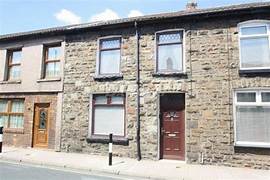
If you drive through the Rhondda Valley on a misty evening, you’ll notice the lights in the terraced houses flickering through the fog, the smell of coal dust still faint in the air, and the deep quiet that settles after sunset. In the 1970s, one small house at the far edge of Gelli was the centre of a haunting that locals still whisper about, the home of the Morgan family.
The First Signs
In 1972, a young couple, Eira and Gareth Morgan, moved into the narrow terraced house on Gelli Road. Gareth worked underground at the colliery, while Eira looked after their two small children. The house was old but solid: thick sandstone walls, iron latch doors, and a cellar that had once stored coal.
The first strange thing happened on a rainy afternoon that winter. Eira was hanging washing by the fire when she heard footsteps coming from upstairs. Not heavy ones, slow, deliberate, walking from the back bedroom to the landing. She thought Gareth had come home early, but when she called his name, the sound stopped. Then, a moment later, a voice, clear as breath, whispered something she couldn’t understand right next to her ear. The baby started crying.
That night she told Gareth. He laughed it off, saying old houses make strange noises. But a week later, it happened again, this time when the whole family was eating dinner. The same slow tread, one step at a time, above their heads. They checked the rooms together but found nothing.
Only the baby’s pram, which had been by the window, was now facing the wall.
The Voice in the Cellar
By spring, the footsteps had become a nightly event. Dishes rattled without reason; cold patches appeared in the kitchen; the radio switched on by itself at odd hours, always tuned to static.
The cellar door became a particular source of fear. It would tremble softly in the evenings, as though someone were pushing it from the inside. Gareth finally decided to go down and have a look. The lightbulb hung dead, so he took a torch and stepped onto the damp stone steps.
He reached the bottom and froze.
There were footprints in the coal dust, bare feet, small, trailing away into the back corner. And in that corner, something glinted, an old brass button, like part of a miner’s uniform.
The next night, Eira dreamt she heard breathing at the end of her bed. She woke shivering to see the indentation of someone sitting there in the moonlight, but the air was completely still.
The Miner
A neighbor named Mary Thomas, who lived on Gelli Road, eventually told Eira what the locals already knew. In 1899, the old house had been part of company housing for colliery workers. When a shaft collapse killed seven miners, one body was never brought out, that of a young man called Dafydd Hughes, who had lived in that very house’s front room with his mother. According to rumour, he had promised her, “No matter what, Mam, I’ll come home to you.”
But he never did.
Eira thought little of it at first, but that same week, she found coal dust scattered across the hallway each morning, in the shape of boot prints. She spent hours scrubbing, only for them to return by the next dawn.
Once, Gareth followed them down to the cellar again. But when he got there, he swore he heard a man’s voice whisper, “Home,” drawn out and hollow. He refused to sleep in the house for three nights.
The Night of the Collapse
In May, heavy rain hit the valley, turning the roads into rivers. Eira was up late mopping when she realized the sound of dripping came not from the roof but from inside the walls. Then, a low groan filled the house, the kind stone makes under pressure.
She grabbed the children and ran out into the street just before the rear kitchen wall cracked completely, part of it sinking into the old coal tunnel that ran beneath the terrace. The emergency teams arrived, and the following morning they discovered that a disused drift mine had begun collapsing under several houses on the street.
When engineers inspected the Morgans’ cellar on Gelli Road, they found that the back wall had caved inward into a hollow chamber filled with rubble… and there, against the edge of the exposed shaft, was a partial skeleton. A rusted brass button still clung to its tattered remnant of uniform.
Aftermath
The authorities sealed the tunnel and reburied the remains in a local cemetery. When investigators returned to shore up the foundation, they found the cellar walls unusually dry, as if the moisture had suddenly vanished overnight. Eira told one reporter that the house felt “peaceful” for the first time since they’d moved in.
For three weeks, all was calm.
Then, one dawn, she woke to find a fine layer of coal dust spread gently across the dining table, and four words traced with a fingertip:
“Thank you for home.”
Where It Stands Now
The old house still exists on Gelli Road, though its number has changed and the cellar has been sealed for decades. People who live nearby still talk about the Morgans and the haunting how the story was printed once in the Rhondda Leader under the headline “Miner Returns Home After 70 Years.”
Walk by late enough, they say, and you might still catch the faint smell of coal smoke in the breeze, or hear a slow tread on the cobbles behind you, one step, then another, as though someone’s still climbing home.
And if you listen closely, just before the rain starts, you might hear a single word whispered out of the mist:
“Home.”